


• DALL PhytoLab
  • Contact
  • the nature network
  • Events
  • EN
    • DE
PL_Logo_RGBPL_Logo_RGBPL_Logo_RGBPL_Logo_RGB
  • Services
    • Service Portfolio
    • Quality Control – phycheck®
    • Trace Analysis – phytrace®
    • Regulatory Affairs – phyreg®
    • Medical Affairs – phyguard®
    • Reference Substances – phyproof®
    • Expert reports
  • Branches
    • Phytopharmaceutical, homeopathic and anthroposophic products
    • Teas and beverages
    • Baby food
    • Dietary supplements, dietary foodstuffs and substance-based medical devices
    • Animal nutrition
  • phyproof® Webshop
  • Company
    • History
    • Events
  • News
  • Downloads
  • DALL PhytoLab
  • Contact
  • the nature network
  • Events
  • EN
    • DE
Back to Overview

Reliable determination of residual solvents Analytical challenges with pharmaceuticals, extracts, food and raw materials

Residual solvents are produced in numerous manufacturing processes, such as extraction, purification and synthesis, and they are also subject to strict regulatory requirements. Reliable determination of these substances therefore constitutes a central component of quality control in the pharmaceutical, food technology, and cosmetics industries.

However, the analysis of residual solvents poses particular challenges in complex product matrices, such as plant extracts, high-fat foods or pharmaceutical formulations.


Typical analytical challenges

In practice, the determination of residual solvents can be hampered by a number of different factors:

  • complex matrices, such as botanical extracts, oils, or pastes
  • a broad spectrum of possible solvents
  • very low regulatory limits
  • solvents with similar retention times
  • different regulatory requirements in different industries

As far as manufacturers are concerned, this often means that standard methods cannot be applied to every product matrix without being modified. Meticulous method selection and optimization are therefore crucial in order to obtain reliable results.


Why determination of residual solvents is so important

Residual solvents can have different effects on different products. They may have toxicological relevance, affect stability or alter sensory properties according to the respective substance and concentration. At the same time, they are subject to binding limits, such as those imposed by ICH Guideline Q3C or laid down in food legislation.

Chemical analysis therefore fulfils several functions: ensuring compliance with regulatory limits, supporting quality assurance during production and providing indications of any deviations in the process.


Regulatory principles

The requirements to be met in the pharmaceutical sector are particularly stringent. ICH Guideline Q3C assigns solvents to three classes, according to their respective toxicological risk, and defines permissible limit values. Furthermore, pharmacopoeias, such as Ph. Eur. or USP, define methodological stipulations for the determination of residual solvents. Analytical methods must also be validated in accordance with the requirements of ICH Q2(R2).

Clearly defined stipulations also exist in the food sector, in the form of European regulations on extraction solvents or maximum levels defined for certain solvents, for instance. Raw materials and reference substances are frequently evaluated on the basis of product-specific specifications.


Analytical methods

Headspace GC (HS-GC)

Headspace gas chromatography has become established as the standard procedure for the determination of residual solvents. It not only enables sensitive analysis with relatively little sample preparation work, but is also suitable for solid, liquid, and pasty matrices.

Flame ionization detectors (FID) or mass spectrometers (MS) are frequently used as detectors. MS detection is particularly useful for complex matrices or for confirming identity.

Direct injection (GC-DI)

Alternatively, direct injection can also be used in gas chromatography if solvents are only moderately volatile, for example, or headspace technology is unsuitable. However, this method leads to increased matrix loading of the system.


Validation and verification

Complete method validation is required for pharmaceutical applications. The assessment evaluates various properties, including specificity, linearity, accuracy, precision, limits of quantification and robustness.

Method verification is necessary when pharmacopoeia methods are adopted or validated methods are transferred to new matrices. The purpose of this is to obtain evidence to prove that the method also works reliably for the product matrix concerned.


Practical solutions

A number of different strategies are frequently used to meet analytical challenges. They include product-specific methods for problematic matrices, optimization of headspace parameters and use of MS detection for better identification of individual solvents.

It may also be necessary to adopt matrix-adapted calibration strategies. Multimethods that offer an efficient means of covering a broad spectrum of solvents are also being used to an increasing extent.


Conclusion

Determination of residual solvents is an integral element of quality control in many industries. Complex product matrices, diverging regulatory requirements, and a broad range of possible solvents place high demands on chemical analysis.

Headspace GC has become established as a reliable standard method, but there are certain sample matrices that require adapted or specialised sample preparation routines and alternative measurement techniques. Appropriate method selection and meticulous validation or verification are crucial in order to obtain reliable results.


More blog posts

March 16, 2026

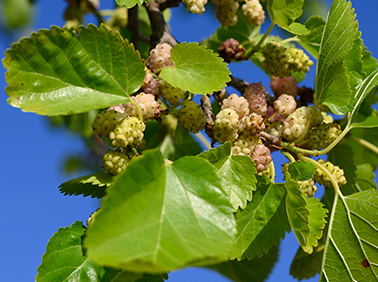
White mulberry (Morus alba) – between traditional use and analytical characterisation

The leaves of the white mulberry (Morus alba) have been used in traditional Chinese medicine (TCM) for a long time now. They also play an important […]

Read more
February 10, 2026

Ginger (Zingiber officinale) – medicinal plant of the year

Ginger (Zingiber officinale) – medicinal plant of the year with a broad spectrum of active constituents   Ginger (Zingiber officinale) is a great deal more than […]

Read more
March 20, 2025

Cleaning validation

Background:  There is always a risk of cross-contamination during pharmaceutical manufacturing processes when the same facilities are used to produce different active pharmaceutical ingredients (API) or […]

Read more
Phytolab-Footer-logo
  • Legal Info
  • Privacy Policy
  • Contact
  • General Terms and Conditions
  • Careers
Member of The-Nature-Network-Footer-Logo
© 2026 Phytolab

    To operate our website technically functional and securely, our website uses cookies. If you declare your consent, we may use cookies also to and ongoingly adjust our website to your needs, to offer social media functions and to analyze information on the access to our website. You may revoke your consent anytime. Further information my be obtained through our privacy statement. 

    Privacy Overview

    To operate our website technically functional and securely, our website uses cookies. If you declare your consent, we may use cookies also to optimize and ongoingly adjust our website to your needs, to offer social media functions and to analyze information on the access to our website. You may revoke your consent anytime. Further information my be obtained through our privacy statement.

    Strictly Necessary Cookies

    Strictly Necessary Cookie should be enabled at all times so that we can save your preferences for cookie settings.

    Cookies

    Name: moove_gdpr_popup

    Description: It saves preferences for cookie settings.

    Duration: 1 year


    3rd Party Cookies

    This website uses cookies to collect anonymous information such as the number of visitors to the site, and the most popular pages.

    Keeping this cookie enabled helps us to improve our website.

    Cookies:

    Google Analytics

    Name: _ga

    Description: Used to distinguish users.

    Duration: 2 years


    Name: _gid

    Description: Used to distinguish users.

    Duration: 24 hours


    Name: _gat_gtag_UA_200342150_4

    Description: Used to throttle request rate. 

    Duration: 1 minute


    Name: _gat_gtag_UA_200342150_5

    Description: Used to throttle request rate. It comes from career page.

    Duration: 1 minute


    Name: _ga_880GNFTSXM

    Description: Used to persist session state. 

    Duration: 2 years


    Name: _ga_MZ11G8TEY0

    Description: Used to persist session state. It comes from career page.

    Duration: 2 years


    Google Adsense

    Name: _gcl_au

    Description: Used to store and track conversions.

    Duration: permanent (until manual deletion)


    e_tracker

    Name: et_coid

    Description: cookie recognition

    Duration: 2 years or configurable


    Name: BT_pdc

    Description: It contains Base64-encoded data of visitor’s history (is client, newsletter recipient, visitor ID, shown smart messages) for personalisation.

    Duration: 1 year


    Name: BT_sdc

    Description: It contains Base64-encoded data of visitor’s session (referrer, number of seconds from the beginning of session, shown smart messages in the session), that are used for personalisation purposes.

    Duration: Session


    Name: et_oi_v2

    Description: Opt-In cookie saves the decision of a user, whether on a page tracking Opt-in should conducted.

    Duration: 50 years for Opt-Out and 480 days for Opt-In


    Other

    Name: cookiesAvailable

    Description: To check whether 3rd party cookies on websites, that share same domain were already accepted

    Duration: Immediately deleted

    Powered by  GDPR Cookie Compliance