The evolution of thin-layer chromatography and the introduction of the Universal HPTLC Mix as a new system suitability test
For decades, thin-layer chromatography (TLC) has been one of the most important analytical methods for the identification of herbal drugs, extracts and pharmaceutical products. Driven by growing demands for standardization, reproducibility and digital data evaluation, classical TLC gradually evolved into high-performance thin-layer chromatography (HPTLC). With the inclusion of general chapter 2.8.25 in the European Pharmacopoeia, HPTLC was comprehensively standardized and established as a modern platform technology for the analysis of herbal medicinal products. A further milestone is the introduction of the Universal HPTLC Mix (UHM), which enables a method-independent qualification of the entire chromatographic system.
The development from TLC to HPTLC
For many decades, classical thin-layer chromatography was used as a simple and cost-effective separation technique. This was sufficient for many identity tests, but reproducibility and documentation often depended on the individual laboratory. HPTLC emerged with the further development of chromatographic materials and instrumentation.
Table 1: Overview of key technological innovations in thin-layer chromatography
| Feature |
Classical TLC |
Modern HPTLC |
| Sample application |
Manual |
Automated and position-controlled |
| Stationary phase |
Coarse sorbent particles; less defined layer parameters |
Silica gel particles of 2–10 µm; defined layer thickness of approx. 200 µm |
| Development conditions |
Only partially controlled |
Controlled humidity and standardized development chambers |
| Separation performance |
Limited |
Higher separation performance and improved resolution |
| Detection and documentation |
Mainly visual evaluation, often laboratory-dependent |
Digital image acquisition, electronic documentation and software-based evaluation |
| Quantification |
Only possible to a limited extent |
Image-based quantification or densitometry |
Today, the European Pharmacopoeia describes HPTLC as a standardized analytical platform for identification, for testing a minimum content or determining selected markers, and for limit tests for adulteration in herbal products. HPTLC has thus evolved from a primarily qualitative technique into a standardized analytical procedure. The most important innovation was the introduction of a system suitability test (SST).
From analyte-specific SST to system qualification
Classical system suitability tests (SSTs) are usually based on the separation of a few analyte-specific reference substances and only assess a limited range of the chromatogram. As a result, the performance of the entire chromatographic system and the comparability between different methods can only be evaluated to a limited extent.
The Universal HPTLC Mix (UHM) introduced a system-oriented approach. The mixture of eight reference substances of different polarity covers a broad RF range and allows a more comprehensive assessment of the chromatographic system, independent of the sample under investigation. Changes in key influencing factors such as humidity or mobile phase can be reliably detected.
The inclusion of the UHM as HPTLC System Suitability Solution CRS in chapter 2.8.25 of the European Pharmacopoeia marks the transition from analyte-specific SST testing to the qualification of the entire chromatographic system.
Table 2: Advantages of the Universal HPTLC Mix
| Classical SST |
Universal HPTLC Mix |
| Method- or monograph-dependent |
Applicable to different chromatographic systems |
| Mainly qualifies a limited RF range |
Can qualify the entire RF range |
| Different reference substances for each method |
One standardized mixture of eight components |
| Markers that are sometimes costly or difficult to obtain |
Selected reference substances that are comparatively easy to obtain |
| Local assessment of separation performance |
More holistic system qualification |
| Strong dependence on individual analytes |
Largely independent of the sample analytes |
Opportunities and challenges of the Universal HPTLC Mix
The Universal HPTLC Mix offers numerous advantages (Table 2). At the same time, however, it increases the technological complexity of HPTLC analysis. The evaluation of the UHM is based on the detection of zones at 254 nm without derivatization. Reliable detection of the partly weakly absorbing components requires modern HPTLC systems with high-performance UV optics, high-resolution digital imaging and suitable evaluation software. While classical TLC methods could often still be performed with simple visual assessment, the use of the UHM requires a considerably higher degree of instrumental standardization. This can be a challenge, particularly for smaller laboratories, and raises the requirements for instrument qualification, maintenance and staff training.
The Universal HPTLC Mix thus exemplifies the development of HPTLC from a comparatively simple visual identification technique into a highly standardized, digitally supported analytical platform. The increasing standardization of HPTLC and the introduction of the Universal HPTLC Mix as a pharmacopoeial system suitability test place new demands on equipment, digitalization and method standardization in the laboratory. Thanks to its existing HPTLC infrastructure, established workflows and corresponding analytical expertise, PhytoLab is already able to meet the requirements of the current chapter 2.8.25 of the European Pharmacopoeia. The Universal HPTLC Mix is integrated into the HPTLC workflow, so that the procedures described in the monographs and converted to the new HPTLC System Suitability Solution CRS can be applied and implemented immediately.
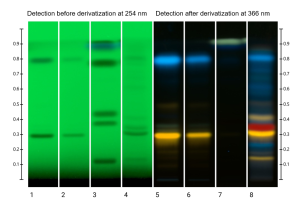
Figure 1: HPTLC (2.8.25) chromatogram of peppermint according to Ph. Eur. monograph Menthae piperitae folium 04/2027:0406
Track 1/5 – Reference solution a) rutoside and rosmarinic acid (increasing Rf value); Track 2/6 – Reference solution b) rutoside and rosmarinic acid (increasing Rf value)/intensity marker; Track 3/7 – HPTLC system suitability solution CRS; Track 4/8 – Test solution peppermint leaves
References and sources used
- European Pharmacopoeia 13.1, General Chapter 2.8.25, “High-Performance Thin-Layer Chromatography of Herbal Products”, chapter reference 01/2027:20825.
- European Pharmacopoeia 10.0, General Chapter 2.8.25, “HPTLC of Herbal Drugs and Herbal Drug Preparations”, 01/2020:20825.
- Thi Kieu Tiên Do, Marco Schmid, Manjusha Phanse, Akshay Charegaonkar, Hanspeter Sprecher, Markus Obkircher, Eike Reich, Development of the first universal mixture for use in system suitability tests for High-Performance Thin Layer Chromatography, Journal of Chromatography A, Volume 1638, 2021, 461830, ISSN 0021-9673
- Universal HPTLC Mix (UHM) for Simplified System Suitability Tests: A Novel Concept for HPTLC Suitability Test, Tiên Do, Head of Laboratory1, Eike Reich, Chief Scientific Officer1, Hanspeter Sprecher, R&D Scientist2, Matthias Nold, Product Manager Reference Materials2 1CAMAG, 2Merck; Article from Analytix Reporter – Issue 14